

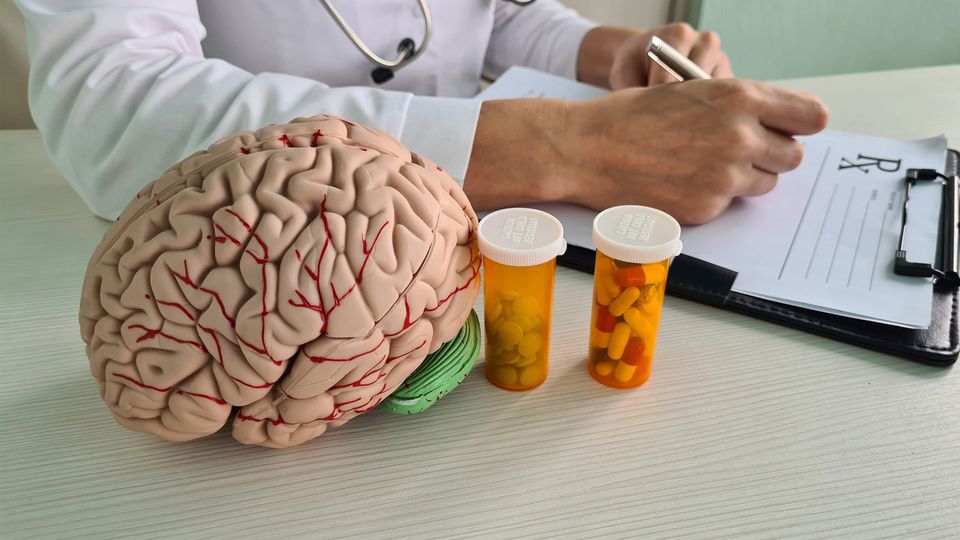
Being addicted is bad, obviously. But the way we understand addiction could make it worse. Much of the public – maybe even most of it – seems to mainly consider addiction a failure of character. Meaning that the alcoholic, or the drug addict, or the compulsive gambler, or the obese person, has within themselves the power to return themselves to normal if they just gird their loins and summon the willpower to do so.
The hijacked reward system
All addictive substances, regardless of their class of chemical, all converge on a single, ancient pathway in the brain: the mesolimbic dopamine pathway – the reward pathway. This system evolved to reinforce the most critical actions for our survival and that of our species: eating, connecting with others, mating. It’s the reason people talk about the “high” of a good meal or the reward of a deep, long hug. It’s not accidental that the things we know are good for us also feel good.
Under the conditions in which it evolved that system releases just enough dopamine – a chemical associated with pleasure, to teach us what is worth doing – in anticipation of these times so that we seek them out, then shuts off in between to reset.
Chronic substance use fills the system with dopamine long past the point the natural reward would end. The brain responds to this signal the only way it knows how: by reducing the number of dopamine receptors (the brain’s attempts to protect itself from too-high levels of dopamine) and by reducing its own production of dopamine. This makes it so a person enjoys the substance or the activity ever less and requires it more and more to feel normal. It doesn’t feel good anymore, but not doing it feels unbearable. It’s not that people with substance use disorders don’t like anything else, even things they used to love, it’s that their very ability to feel pleasure has been co-opted by the substance.
Neuroplasticity: the biological basis for recovery
This is where the science gets really exciting. The neuroplasticity that allowed addiction to alter the brain is the same force that makes recovery possible.
Neuroplasticity is the brain’s ability to reorganize itself by forming new neural connections. It means that rehab has the potential to rebuild physically what addiction broke down.
Neuroplasticity isn’t a finite resource that runs out after certain critical periods in childhood or after injury. It remains active throughout our lives, allowing neurons that carried messages from drug-seeking impulses to repurpose their activity in healthier directions. New patterns can be built up over the old.
Neuroplasticity is the reason why science shows that addiction’s structural brain damage isn’t always permanent. For a variety of substances, the user’s brains do show gains in gray matter, white matter, and in the function of areas like the prefrontal cortex.
Rehab centers, in particular, are designed to be intensive practice centers, where the brain can benefit from repeated, ongoing engagement in positive, non-substance-related behaviors. That can lead to new, permanent changes in the way the brain gets wired up.
Personalized treatment and the neuro-assessment model
For the majority of the last hundred years, addiction patients were treated under a one-size-fits-all approach to rehabilitation. The same program, identical treatment duration, and broadly similar methodology were utilized regardless of the specific nature of a patient’s cognitive impairment, history of trauma, co-occurring psychiatric illness, and substance involvement.
Dual diagnosis – where psychiatric and addictive disorders co-occur – poses particular problems. The treatment of one without the other destabilizes the vulnerable, underlying structure.
Modern programs utilizing neuro-assessment and related neurocognitive mapping allow for an appreciation of the patient’s specific deficits and the innovation of treatment methodologies designed to meet these needs. Someone with severe problems of executive dysfunction will require different types of cognitive support as opposed to someone whose primary problems lie in amygdala dysregulation and trauma. This approach allows for the development of more appropriate, individually tailored treatment plans. Opting for a rehab facility which takes this approach, such as those offering evidence-based tailored programs at legacyhealingla.com, would ensure that one’s treatment is specifically calibrated to how one’s brain was affected.
Rebuilding the prefrontal cortex
One of the most consistently damaged regions in addiction is the prefrontal cortex – the area responsible for judgment, impulse control, planning, and self-regulation. Chronic substance exposure suppresses its activity, which is why people in active addiction make decisions that, in retrospect, seem incomprehensible to them. The biological brake system was effectively offline.
Modern rehabilitation addresses this directly. Cognitive Behavioral Therapy isn’t just talk – it’s a structured method for creating new thought patterns that physically strengthen prefrontal pathways over repeated practice. When a patient learns to identify a craving, pause before responding, and choose a different behavior, they are not just developing a habit. They are building new neural infrastructure.
Mindfulness-based practices work similarly. Sustained attentional training activates the prefrontal cortex and builds the kind of top-down emotional regulation that addiction erodes. The more consistently these practices are applied, the more durable the neural rewiring becomes.
Executive dysfunction – deficits in working memory, cognitive flexibility, and planning – doesn’t resolve on its own just because someone stops using. Targeted cognitive rehabilitation, woven into a treatment program, gives the prefrontal cortex the structured exercise it needs to come back online.
Calming an overactive amygdala
As addiction quiets the prefrontal cortex, the amygdala – the part of the brain responsible for threat response and emotional processing – becomes hypersensitive. With the prefrontal cortex in hibernation, all it takes is a perpetual low-grade alarm signal from the amygdala to hijack the rest of the system.
Meanwhile, the amygdala is the part of the brain never fully silenced. Instead, it is flooded with each new dose of a substance. In the face of chronic substance exposure, it’s even been shown to gradually become more active than normal, to recalibrate in response to constant threats to a state of heightened anxiety.
By the time the substance is removed the amygdala is taking up the slack with its newfound hyperactivity. The rest of the amygdala function, like emotional regulation, has been left untouched, but the threat processing functions now have a tidal wave of panic memories to sort through.
Early recovery, for so many patients, is a time of disproportionate emotional chaos and a stress response hair-triggered by the amygdala’s search for further threats in a now fallen world. This is the part of the brain trying to save your life by chaining you to a radiator every time a coworker says there’s coffee in the break room.
The realistic timeline of brain recovery
One of the most valuable contributions modern neuroscience has made to addiction treatment is explaining that, contrary to popular belief (and widespread treatment center messaging), the return of appetite, sleep, and normal stress responses can take many months. Immediate cessation of substance use is essential and nonnegotiable, but the repair of the synaptic dopamine signaling system – essentially, the ability to once again feel pleasure from everyday healthy rewards – takes far longer.
That’s because drugs and alcohol have been artificially elevating dopamine levels in the brain for a long period of time, often many years. With such a long exposure to a surplus of the neurotransmitter, the brain adapts by downregulating natural dopamine signaling, in essence becoming much less sensitive to dopamine from ordinary sources. When substance use stops, the result is a chasm of lessened pleasure signaling. It takes months for the brain to upregulate those receptors back to pre-addiction levels. In the meantime, while the brain is getting back to normal, the emotional experience of early recovery is at best muted and at worst, anhedonic.
Neurogenesis and lifestyle as medicine
During recovery, the brain doesn’t simply repair damaged connections. In the right circumstances, it creates new neurons. This process is called neurogenesis and largely takes place in the hippocampus, a small region deep in the brain crucial for learning and memory functions.
Brain-Derived Neurotrophic Factor (BDNF) is the intercellular stimulant key to this neurogenesis process. A protein that supports survival and growth of neurons, BDNF is like a maintenance and repair service that attempts to sustain and rejuvenate the brain’s cellular infrastructure. Chronic substance use lowers BDNF levels. But, the big news is that abstinence and lifestyle changes raise them right back up.
One of the most consistent findings in recent studies is that BDNF elevates in people who exercise aerobically. In fact, in some reports, aerobic exercise has been found to be even more effective than passive recovery (read: rest) or pharmacological interventions. Don’t forget that good, old-fashioned sleep is the key time that your brain performs all these techno-miracles – literally all the deep cleaning happens when you’re in deep sleep. And your brain – an organ roughly 60% fat – needs all that food you’ve been meaning to eat to repair myelin (the insulation around neurons) and to create new synaptic connections.
How medication-assisted treatment bridges the gap
Medication-Assisted Treatment (MAT) tackles a core issue in early recovery: when brain chemistry is severely thrown off-balance, the psychological work of wellness quickly becomes overwhelming if not impossible to complete.
Medications utilized in MAT do this by blocking the reinforcing effects of one’s drug of choice, reducing extreme cravings to reasonable and manageable levels, and/or blocking the toxic and dangerous effects of substance(s) being withdrawn from. The brain absolutely and unequivocally cannot adopt new learning and behavior patterns if it is in a state of acute biological crisis. MAT does the baseboard work in preparing the neural environment for the arrival of therapy.
The ultimate aim is not to become addicted to a new substance, as the popular criticism goes. It’s that the central nervous system is made normal enough long enough for the patient to authentically perform the cognitive and emotional work that underpins lasting recovery. For many, the crutch of MAT is the difference between engaging in rehab and simply surviving it.
Long-term allostasis: a new equilibrium
Healing from addiction does not return the brain to its pre-addicted state. This is not a pessimistic statement. It’s the scientific truth, and it’s an incredibly important thing to understand.
The end goal is allostasis: the brain arriving at a new, healthier, stable equilibrium not based on the unnatural reward spike addiction provides, but the steady supply of things like exercise, connection, meaning, therapy, sleep, and other essentials of whole-person health. These are, of course, not just help-in-recovery principles; these are the continuing processes that support the new neural structure that recovery begins to construct.
The brain one earns after long-term recovery work isn’t a shattered, then perfectly reassembled, brain. It’s a brain that’s been substantially re-patterned through diligent, daily effort – and it’s often a more self-aware, stronger brain than the one before. This is not a promise of a smooth experience. It is simply a view of the possible.
